Target and Tactical Objective
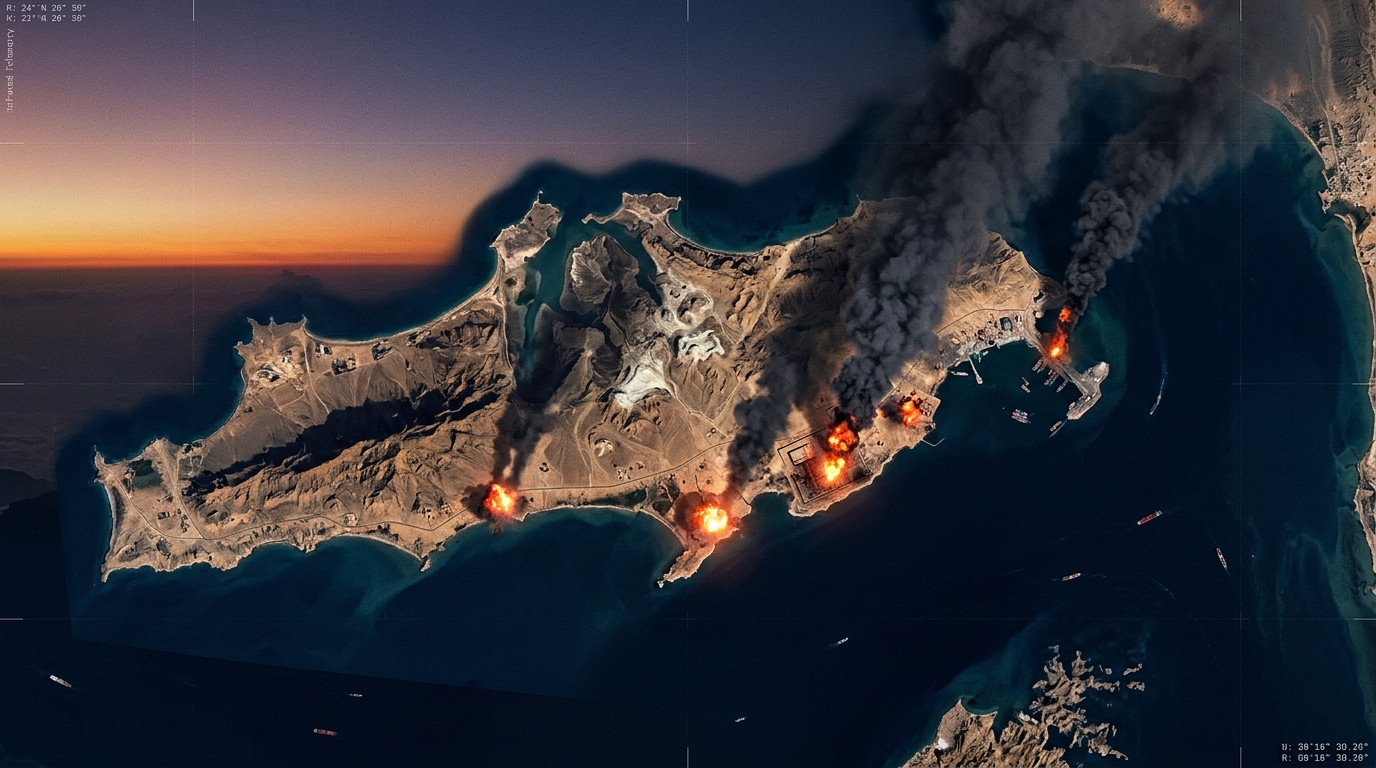
Target Location: Strikes hit military installations on Qeshm Island, an Iranian island commanding the western mouth of the Strait of Hormuz. Qeshm Island occupies an irreplaceable tactical geography, running parallel to the Iranian coast and directly overlooking the international deep-water navigational lanes through which supertankers and container ships pass between the Persian Gulf and the Sea of Oman.
Stated Reason: U.S. defense officials characterized the operation as a "limited defensive strike," stating it was launched after the Islamic Revolutionary Guard Corps (IRGC) fired upon an American military aircraft operating in the area. The action was intended to neutralize immediate surface-to-air threats and degrade defensive missile batteries that directly endanger international aerial and naval freedom of navigation.
Operational Scope
Military officials described the action as focused and defensive in nature rather than the opening salvo of a broader offensive campaign. Command directives placed strict limitations on engagement parameters, confining weapon impacts to confirmed military compounds and air-defense nodes while avoiding civilian infrastructure and nearby commercial maritime anchorages.
Reporting indicates it is part of a series of targeted, previously unannounced U.S. operations aimed at curbing hostile IRGC activities around critical maritime transit corridors. Rather than committing to extensive sustained ground or littoral bombardment, the strategy relies on surgical stand-off deterrence to counter escalating drone and missile provocations across regional waterways.
Strike Execution and Technical Details
Delivery & Munitions: The attack was most likely carried out by combat aircraft using precision-guided stand-off munitions. Iranian state media (IRNA) and local residents reported at least two delivery aircraft and five explosions in rapid succession. This story is still breaking and we will keep you up to date as the story unfolds.
Timing: The strike occurred on the evening of Monday, November 2, 2026, between approximately 5:00 PM and 6:00 PM EST.
Likely Aircraft & Support Platforms: Based on regional deployments, potential delivery platforms include F-15E Strike Eagles, carrier-based F/A-18E/F Super Hornets or F-35Cs, and land-based F-35As, supported by aerial refueling tankers and ISR (Intelligence, Surveillance, and Reconnaissance) assets. The high-altitude approach routes indicate the airframes released long-range GPS/INS and electro-optical guided stand-off weaponry while remaining outside the dense engagement envelopes of land-based Iranian air-defense batteries.
Drone Claims: The IRGC claimed to have downed two U.S. drones south of Qeshm Island during the operation. U.S. Central Command has not confirmed any unmanned airframe losses.
U.S. Disclosure: The Pentagon has not released an unclassified breakdown detailing the specific aircraft squadrons or missile models involved in the strike, maintaining tight operational security around strike routing and electronic countermeasures deployed during the ingress and egress phases.
TARGET SECTOR: 26°45'N, 55°55'E • Qeshm Island Coastal Defense Complex
ESTIMATED IMPACTS: 5 Kinetic Detonations (IRNA confirmed / Local Observer Reports)
ACTIVE PLATFORMS: Strike Aircraft Detachment + KC-135/KC-46 Tanker Bridge + High-Altitude ISR
Political and Diplomatic Backdrop
Public Messaging: Despite the military action, the White House has publicly downplayed immediate plans for an expanded war. When asked whether major military operations against Iran would expand after the November 3 midterm elections, President Donald Trump stated "No," citing ongoing diplomatic signals that Tehran may seek a settlement.
Tehran's Position: Iranian officials have indicated that the prospects for any de-escalation or diplomatic negotiations remain contingent on Washington ceasing direct military engagements in the Persian Gulf. Hardline factions within the Iranian parliament have demanded proportional responses, while moderate interlocutors have emphasized the severe economic hazards of sustained maritime escalation.
Regional and Geopolitical Implications
The strike on Qeshm Island significantly escalates friction between Washington and Tehran, raising concerns among neighboring Gulf nations regarding potential retaliatory actions. Regional allies have called for restraint, warning that any further tit-for-tat exchanges risk destabilizing delicate security agreements and trade partnerships across the Middle East.
Foreign ministries across the Gulf Cooperation Council (GCC) issued emergency advisories, with officials in Muscat and Doha intensifying backchannel mediation efforts to prevent retaliatory rocket strikes against Gulf energy infrastructure or allied naval bases.
Maritime Security in the Strait of Hormuz
Positioned at the narrowest point of the Strait of Hormuz, Qeshm Island serves as a critical strategic vantage point. Following the incident, international maritime monitoring groups reported heightened readiness levels among naval patrols and commercial vessels in the corridor.
Increased insurance premiums for maritime shipping passing through the Persian Gulf are expected as security risks remain elevated. Private maritime security companies (PMSCs) advised commercial tankers to maintain high transit speeds, refrain from idling near Iranian territorial water limits, and strictly adhere to the designated International Recommended Transit Corridor (IRTC).
Impact on Global Energy Markets
With roughly a fifth of the world's petroleum supply transiting the Strait of Hormuz, news of the targeted operation prompted immediate volatility in global crude futures. Market analysts caution that prolonged instability or additional military engagements near key sea lanes could disrupt global oil distribution schedules and drive up energy prices worldwide.
Brent crude futures spiked within minutes of initial strike reports, compounding already strained global refining and diesel inventory benchmarks. Traders are closely monitoring tanker traffic data for any signs of route diversion around the Cape of Good Hope or precautionary harbor holds by major oil conglomerates.
Outlook for Diplomatic Channels
While backchannel communications between international intermediaries continue, the immediate prospect of formal de-escalation talks remains uncertain. Analysts suggest that future diplomatic progress will depend on whether both parties refrain from further military action while attempting to establish mutually acceptable parameters for maritime navigation and security.
With mid-term domestic political dynamics in the United States and internal political deliberations in Tehran hanging in the balance, both administrations face delicate calculations between deterring aggression and avoiding an uncontrollable regional conflagration.