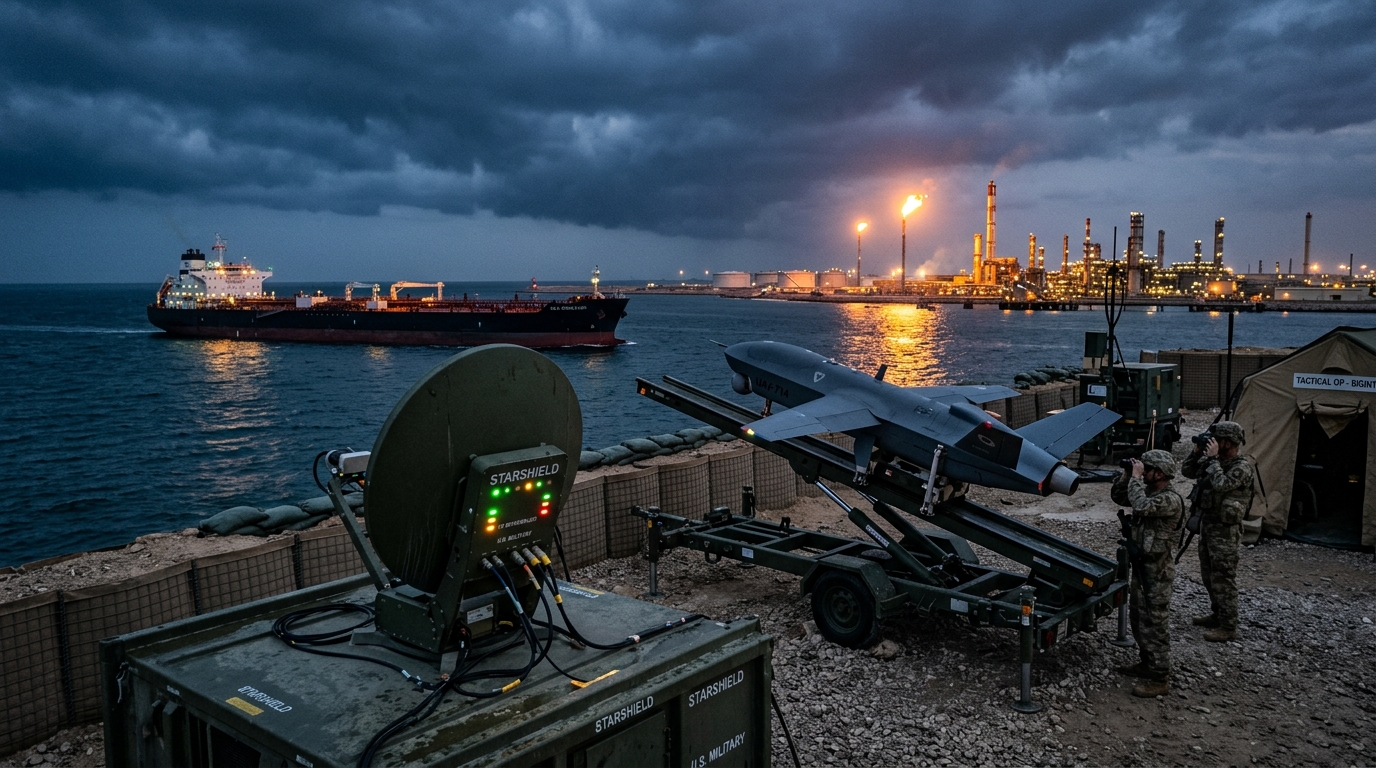
Executive Operational Telemetry: October 2026 Convergence
In October 2026, two major decisions fundamentally altered the trajectory of the Russia–Ukraine conflict across energy markets and low-Earth orbit:
- The Russian Diesel Waiver: The U.S. Treasury issued General License No. 135, suspending key sanctions to release 4.8 million metric tons of Russian diesel globally through April 2027.
- The Starshield Speed Cap: SpaceX implemented an unannounced 160 km/h speed limit on military Starshield terminals, crippling Ukrainian interceptor and strike drone operations.
- Political Fallout: The dual moves triggered a bipartisan revolt in Congress, severe friction with NATO allies, and public accusations of betrayal from Ukrainian President Volodymyr Zelensky.
In the span of a single week in October 2026, the geopolitical landscape of the Russia–Ukraine war shifted dramatically across two seemingly separate fronts: global fuel markets and low-Earth orbit.
On October 9, the Trump administration announced a controversial agreement with Moscow to release 4.8 million metric tons of Russian diesel into U.S. and global markets, backed by a Treasury Department waiver suspending key energy sanctions until April 2027. Less than five days later, overnight on October 13–14, Ukrainian military units discovered that SpaceX had abruptly throttled high-speed connectivity on their military-grade Starshield satellite terminals—crippling the fast-moving interceptor and strike drones Kyiv relies on to defend its cities and target Russian logistics.
Taken together alongside a fragile, U.S.-brokered "energy ceasefire," the twin developments sparked a bipartisan revolt in Congress, warnings of a dangerous precedent from European allies, and an unprecedented public accusation of betrayal from Ukrainian President Volodymyr Zelensky.
1. The October 9 Russian Diesel Deal: Terms vs. Market Reality
With U.S. retail diesel prices surging to a record $6.52 per gallon in late September and hovering between $6.20 and $6.28 per gallon in early October, the White House moved to inject Russian fuel into global supply chains ahead of the November midterm elections. To facilitate the transfers, the U.S. Treasury Department’s Office of Foreign Assets Control (OFAC) issued General License No. 135, temporarily authorizing transactions involving Russian-origin diesel through April 7, 2027.
Under the framework announced by President Donald Trump, Moscow committed to a staged release totaling 4.8 million metric tons of diesel:
- October 2026: More than 300,000 metric tons released immediately.
- November 2026: 500,000 metric tons.
- Winter Follow-Up: 1 million metric tons delivered immediately thereafter.
- Contingent Tranche: An additional 3 million metric tons slated to arrive "within a short period of time," contingent on Russian refining capacity.
While 4.8 million tons sounds substantial in isolation, energy analysts point out that the volume is a drop in the bucket compared to domestic and global consumption—and addresses a shortage the United States does not actually have.
2. Physical Balances: Context & Market Scale
| Metric | Daily / Total Volume | Context & Market Scale |
|---|---|---|
| U.S. Diesel Production | ~5.29M bpd | Exceeds domestic consumption by roughly 40% (early Oct 2026 EIA data) |
| U.S. Diesel Demand | 3.65 – 4.1M bpd | Equivalent to ~500,000 metric tons per day |
| U.S. Net Export Surplus | ~1.5+ million bpd | The U.S. is a major net exporter of distillate fuel, not a net importer |
| Global Diesel Demand | ~29.1M bpd | Roughly 3.5 to 4 million metric tons consumed worldwide daily |
| October Russian Tranche | 300,000 metric tons | Equals less than 60% of a single day of U.S. domestic consumption |
| Total Deal Volume (6 Mos.) | 4.8M metric tons | Averages ~200,000 barrels/day; less than 8 days of global seaborne trade |
Because the United States already produces roughly 1.5 million more barrels of diesel per day than Americans consume, domestic fuel spikes are driven by tight global refining capacity and benchmark pricing rather than a physical shortage of U.S. fuel. Supply chain experts note that the Russian volumes—averaging just 200,000 barrels per day over the six-month license—will simply reshuffle existing seaborne trade flows without materially lowering freight, agricultural, or consumer costs at the pump.
Instead of relieving American truckers and farmers, analysts warn the arrangement primarily benefits Moscow. Throughout 2026, Ukrainian drone strikes on Russian oil refineries disrupted Moscow's processing infrastructure and caused refined inventory backups. The U.S. waiver hands Russian oil companies a legal avenue to offload stranded inventory and secure hard-currency revenue.
3. Bipartisan Backlash and Statutory Collisions
The Treasury waiver triggered immediate pushback on Capitol Hill, where lawmakers argue the administration is bypassing two major federal statutes:
- The Ending Importation of Russian Oil Act (2022): Enacted following Russia’s full-scale invasion of Ukraine, the law explicitly bars Russian energy imports into the United States. The statute stipulates that the President may lift the ban only after certifying to Congress that Russia has agreed to withdraw its forces and cease hostilities in Ukraine—conditions that remain unmet.
- The Lindsey O. Graham Sanctioning Russia and Iran Act of 2026: Signed into law by President Trump on September 18, 2026, the bipartisan legislation codified sweeping financial sanctions against Moscow and authorized tariffs of up to 100% on major foreign buyers of Russian oil. Issuing a general license for Russian diesel less than a month later undercuts the core intent of the statute ahead of its October 19 enforcement deadline.
4. The Starlink Crisis: High-Speed Throttling on the Front Lines
For Kyiv, the Russian fuel waiver was only half of the shock. Behind the scenes, U.S. officials had pressured Ukraine to halt its long-range drone strikes against Russian oil refineries, culminating in a surprise "energy ceasefire" announced by President Trump over the weekend of October 10–11. Then, at approximately 1:00 AM on October 14, SpaceX abruptly implemented speed restrictions on the Starshield military satellite service package used by Ukraine’s Defense Forces.
Operational Impact on Drone Warfare
- The 160 km/h Cap and Signal Dropouts: Presidential adviser Serhiy Beskrestnov confirmed an unannounced speed limit of 100 mph (160 km/h) on moving terminals. In the field, Ukraine’s 7th Rapid Reaction Corps reported connection dropouts of 10–20 seconds at speeds as low as 110–120 km/h.
- Crippled Drone Operations: The restrictions severely degraded mid-range strike drones and fast interceptor drones tasked with neutralizing Russia's jet-powered attack drones, causing active missions to be scrubbed.
- International Friction: Polish Foreign Minister Radosław Sikorski publicly challenged Elon Musk on X regarding the unannounced restrictions, highlighting that Poland funds $50 million annually for Ukrainian Starlink access.
5. Timeline: A Four-Year Battle Over Satellite Control
| Date | Event / Operational Action | Impact & Key Details |
|---|---|---|
| September 2022 | Crimea Drone-Boat Refusal & Kherson Outages | SpaceX denies coverage over Sevastopol for maritime drone strikes. Geofencing changes disrupt Kherson counteroffensive communications. |
| February 2026 | The 'Whitelist' Purge | SpaceX and Ukraine enforce a strict terminal whitelist, shutting down smuggled Russian terminals and causing a major Russian communications blackout. |
| October 8, 2026 | Zelensky's Pryluky Plea | Zelensky urges Washington to unlock full Starlink capabilities to target Russian missile launchers following "stalemate" remarks by U.S. officials. |
| October 14, 2026 | Starshield High-Speed Cap | SpaceX throttles Starshield terminals above 160 km/h without notice, severely impairing Ukrainian interceptor and strike drone fleets. |
6. Diplomatic Fallout and Shifting Blame
The convergence of the diesel sanctions waiver, the unannounced Starshield speed cap, and continued Russian missile strikes on Ukrainian power plants brought tensions between Kyiv and Washington to a boiling point on October 14.
Appearing on Piers Morgan Uncensored, Zelensky was asked directly whether he felt betrayed by the Trump administration. "Really, yes, between us," Zelensky answered, warning that the satellite restrictions would lead directly to human losses. Meanwhile, official responses across Washington and SpaceX diverged significantly:
Stated that usage and speed limits on Pentagon-contracted Starshield units are decided by the U.S. military and executive branch, emphasizing that commercial Starlink remains defensive.
Characterized the conflict as a "strategic stalemate" requiring diplomatic settlement—a framing rejected by Kyiv.
President Trump declined to clarify whether Russian strikes on Kyiv's energy grid violated the ceasefire or whether diesel revenues would fund Russian armaments.
7. Conclusion & What to Watch
As Congress approaches the October 19 reporting deadline under the Graham Sanctions Act, the intersection of U.S. domestic fuel politics and battlefield satellite governance leaves Ukraine in an extraordinarily precarious diplomatic position. Key indicators to monitor include congressional legislative action to block General License No. 135, potential adjustments to Starshield operational limits, and formal foreign policy shifts ahead of the November midterm elections.
Cross-Desk Telemetry Integration
Correlated against low-Earth orbit RF signal telemetry over the Dnipro corridor, Baltic and Black Sea AIS petroleum transshipment tracking, and OFAC General License No. 135 compliance logs.