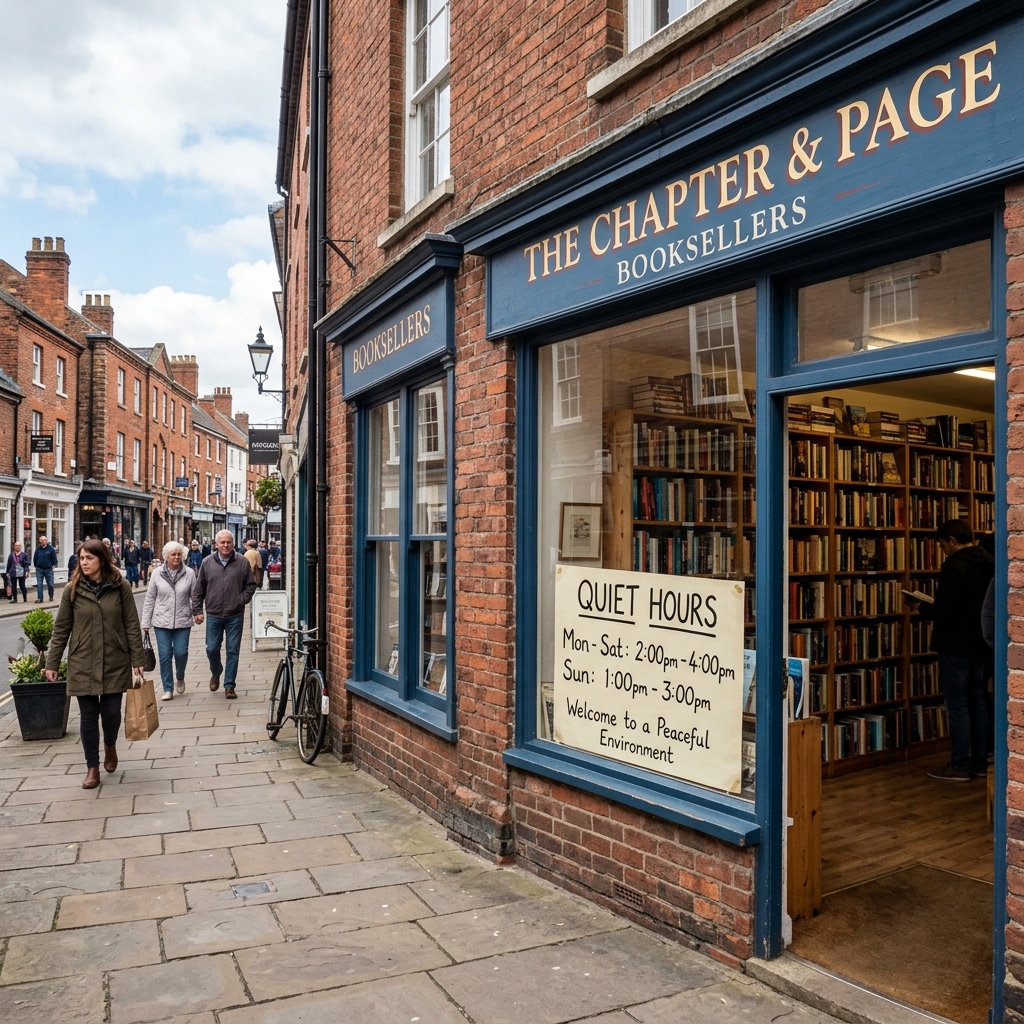
From major chains like Tesco and Morrisons to electronics retailers like Currys, these dedicated periods are reshaping the modern shopping experience. Beyond being a simple courtesy, there is a profound scientific and neurological basis for why these quiet hours are critically necessary.
THE NEUROLOGY OF SENSORY OVERLOAD
For most shoppers, the overlapping sounds of a grocery store are easily ignored. However, for neurodivergent individuals — such as those with Autism, ADHD, or sensory processing conditions — the brain processes this sensory information differently.
- Autistic brains often struggle to filter out irrelevant auditory input, meaning the auditory system may process sounds at a much higher volume and detect frequency changes faster.
- Functional imaging studies show heightened neural activation when hearing noises that neurotypical individuals barely register.
- Autistic individuals can become quickly overwhelmed by “sound layering,” which occurs when multiple unpredictable noises happen simultaneously.
- When the brain is bombarded with too much auditory and visual information at once, it leads to sensory overload, which can cause intense distress and anxiety.
- Over time, navigating these overstimulating environments can contribute to chronic stress, nervous system overload, and burnout.
THE SUPERMARKET “SPIDERWEB”
Research from the University of Reading has highlighted exactly how disabling typical retail environments can be.
- In studies involving autistic individuals, supermarkets were repeatedly identified as one of the most challenging public spaces to navigate.
- Participants described the modern supermarket as a complex “spiderweb” of sensory experiences, where many small triggers constantly build up to cause overwhelming stress.
- Key sensory triggers identified in the research include loud, unpredictable noises from self-checkout machines and background music, bright artificial lighting, strong smells in the produce aisles, and sudden temperature changes in chilled sections.
THE PHYSICS OF THE QUIET HOUR
To combat this, retailers implement systemic changes that significantly alter the physical environment. The primary goal is sensory reduction, not absolute silence.
- Stores turn off background music, silence in-store announcements, and dim overhead lights to create a softer, calmer visual atmosphere.
- Digital displays and TV walls are switched from dynamic, attention-grabbing videos to static, unchanging images, which drastically reduces visual stimulation.
- On a decibel level, a normal retail environment hovers around 60 decibels (dB). During a quiet hour, the absence of music and announcements can drop the ambient noise to around 54 dB.
- Because the decibel scale is logarithmic, this seemingly small numerical drop of 6 dB represents a substantial decrease in the actual sound energy bombarding the shopper.
BROADER IMPACT AND ADOPTION
- At least 1% of the population in the UK is autistic, and many intentionally avoid supermarkets due to the intense sensory barriers.
- It is estimated that this avoidance costs supermarkets around £13.5 million in weekly revenue, totaling more than £700 million a year.
- While public participation is voluntary and relies heavily on social cues, the systemic changes controlled directly by the store — like reducing lighting and electronic noises — are what truly make the shopping trip manageable.
- Beyond supporting neurodivergent shoppers, retailers have found that these calmer environments are highly beneficial for elderly customers, individuals with mental health struggles, and parents shopping with young children.
By grounding their store policies in the science of sensory processing, UK retailers are demonstrating that a quieter environment is not just an accommodation, but a vital step toward a more inclusive society.
FOLLOW-UP: BEYOND THE SHOP FLOOR
TRANSPORT & TRAVEL INFRASTRUCTURE
Sensory Pods: Stations like Manchester Piccadilly and Belfast Grand Central have introduced “Sensory Nooks” within their Assisted Travel Lounges. These are semi-enclosed, sound-dampened pods featuring ambient lighting and soft padding, offering passengers a quiet cocoon away from the busy platforms to decompress and regulate.
Quiet Carriages: Many UK intercity train operators already offer “Quiet Carriages” in standard class, where phone calls and loud conversations are banned, making them a highly recommended choice for neurodivergent travelers seeking a lower-stimulation environment.
THE SUNFLOWER LANYARD SYSTEM
Transport staff across the UK — including at major airports, train stations, and bus networks — are trained to recognize the Sunflower Lanyard. Wearing this lanyard silently signals to staff that the individual has a non-visible disability (like autism or sensory processing differences) and may require extra time, clear communication, or access to a quiet space.
Many major UK airports now have dedicated, soundproofed “Sensory Rooms” equipped with soft seating and interactive calming lights, giving passengers a place to escape the overwhelming noise of the departure lounge before a flight.