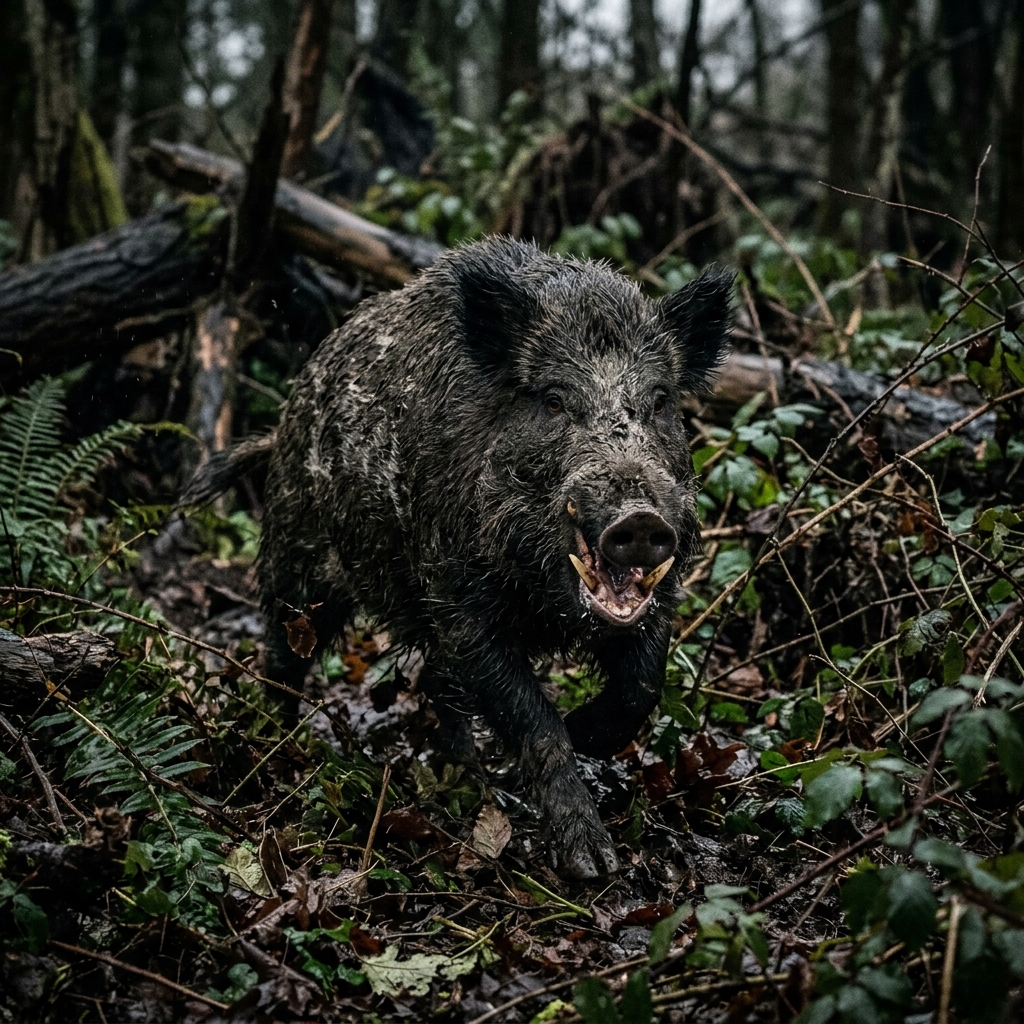
1. United States: A War of Attrition
The numbers remain staggering. The U.S. feral swine population is estimated at over 6 million animals spread across at least 35 states, with some experts at the April 2026 International Wild Pig Conference in Montgomery, Alabama, suggesting the true figure could range as high as 11 million. These animals are not just a nuisance — they are an ecological and economic wrecking ball.
A landmark 2025 study published in Pest Management Science pegged the minimum annual cost of wild pig damage in the U.S. at $3.4 billion, a figure more than double the long-cited $1.5 billion estimate from 2007. The American Farm Bureau Federation, drawing on the most comprehensive producer surveys ever conducted, found that $1.6 billion in agricultural losses occur across just 13 states annually — and that's before accounting for environmental damage, property destruction, and vehicle collisions.
Texas alone shoulders $871 million in agricultural damages. Georgia follows at $152 million, Oklahoma at $116 million. Crop producers report corn as the hardest-hit commodity ($92.2 million in losses), followed by peanuts ($38.5 million) and soybeans ($23.2 million). Livestock producers aren't spared: feral swine cause roughly $85 million in losses through predation, disease, and veterinary costs, with cattle operations absorbing the bulk at $61 million.
2. Signs of Progress
Yet there is genuine good news. The National Feral Swine Damage Management Program (NFSDMP), launched in 2014, has removed over 570,000 hogs and eliminated populations in 12 states. New research estimates the program safeguarded $40.2 billion worth of agricultural and ecological resources between 2014 and 2021. The USDA's APHIS reports that the program has "effectively reduced the number of states with feral swine populations and curbed expansion."
The Feral Swine Eradication and Control Pilot Program (FSCP) — which had lapsed in funding — was revived in 2025 through the One Big Beautiful Bill Act, restoring a critical tool for coordinated, landscape-scale removal. Pilot projects in states like Alabama, Georgia, and Mississippi demonstrated that sustained trapping efforts could reduce corn yield losses from 65% to as low as 14%.
At the April 2026 International Wild Pig Conference, Dr. Jack Mayer of the Savannah River National Laboratory captured the mood: "As time moves on, you folks will see some amazing technologies." He outlined two possible futures: "100% eradication — give it enough money, enough time, and enough resources, and yeah, it is possible. If we don't do eradication, we have to learn to live with them."
3. Canada: Holding the Northern Line
Canada's situation is both more contained and, in some ways, more precarious. The 2025 Canadian Invasive Wild Pig Report, published in early 2026, confirms that established, self-sustaining populations of wild pigs — primarily Eurasian wild boar and their hybrids — exist in only three provinces: Alberta, Saskatchewan, and Manitoba.
The numbers are relatively small but the threat is real. Saskatchewan's Feral Wild Boar Control Program removed over 1,000 animals between 2017 and 2025, and ongoing surveillance suggests the harsh prairie winters, combined with aggressive management, have significantly reduced the population. Manitoba reports that in its cold climate, Eurasian wild boar "stay in smaller groups, grow and mature much more slowly, raise fewer offspring, and rely much more on natural feeds" — making eradication an achievable goal in the province.
Alberta classifies wild boar as pests under the Agricultural Pests Act. It is illegal to hunt them (which can scatter sounders and worsen the problem), and the province runs an active monitoring and trapping program.
Crucially, British Columbia, Ontario, and Quebec have no established populations and are focused entirely on prevention. Ontario's 2025 annual report documented just 64 wild pig sightings, all determined to be escapees from captivity — not breeding populations. The province removed 8 Eurasian wild boar from one confirmed escape event.
A concern flagged by USDA-APHIS researchers is the potential for Canadian feral swine to expand southward. GPS-collar data shows the animals prefer deciduous forests, crops, and wetlands — habitats found throughout southern Saskatchewan and Manitoba, and extending into northeastern Montana, North and South Dakota, and western Minnesota. These northern U.S. states, currently free of feral swine, are considered vulnerable to invasion.
4. Europe: The Native Range Becomes a Battleground
If North America's feral pigs are an invasive catastrophe, Europe's wild boar are a native species that has become spectacularly overabundant — and now faces a devastating disease.
A groundbreaking 2026 study published in the European Journal of Wildlife Research produced the first harmonized, continent-wide density maps for wild boar. The findings: Europe holds an estimated 13.5 to 19.6 million wild boar prior to each hunting season. Annual harvests have soared to over 3.3 million animals across 31 countries, with France alone harvesting approximately 860,000 in 2023, Germany 550,000, and Spain 450,000.
But the real story in Europe is African swine fever (ASF). Since its introduction to Georgia in 2007, ASF has marched steadily across the continent. EFSA's 2025 annual report, released in May 2026, revealed that ASF outbreaks in wild boar reached their highest level since 2021 — 11,036 outbreaks, a 44% increase over 2024. Domestic pig outbreaks jumped 76%.
The most dramatic development came in November 2025, when Spain reported its first ASF cases in wild boar since 1994 — a recurrence after 31 years. The outbreak in Catalonia involved a novel genetic subgroup of the virus, and authorities responded with intensive carcass searches using canine units and drones, olfactory repellents around pig farms, and blocking underground passages wild boar might use. As of early 2026, 11 cases had been confirmed.
Poland accounted for nearly one in three EU wild boar outbreaks in 2025. Germany faced a new introduction in North Rhine-Westphalia, genetically linked to strains circulating in Calabria, Italy. Romania reported 81% of all EU domestic pig outbreaks.
Yet there are success stories. Czechia and southern Italy conducted successful regional eradication campaigns in 2025. Belgium had previously eliminated ASF after a point introduction. The key tools remain consistent: rapid carcass detection and removal, targeted culling, and strategic fencing.
5. Australia: Preparing for the Worst
Australia remains ASF-free but is under no illusions. The continent hosts an estimated 3.2 million feral pigs across roughly 38% of its landmass, with a mean density of about 1 pig per square kilometer. Australian authorities have conducted extensive preparedness planning, including the development of an ASF response strategy that would involve targeted pre-emptive culling, movement controls, and — critically — the use of highly effective population control tools like aerial shooting and poison baiting that are largely unavailable in Europe.
6. Asia: A Conservation Crisis
The ASF story in Asia is, in many ways, the most alarming. The region is home to 12 wild pig species, 11 of which are endemic and range from near-threatened to critically endangered. ASF has been confirmed in wild boar, bearded pigs (Sus barbatus), and Philippine warty pigs (Sus philippensis). Mass die-offs of bearded pigs in Borneo and Philippine warty pigs have raised fears of local extirpation or even extinction.
The pygmy hog (Porcula salvania) — the world's smallest wild pig, with perhaps 400 individuals remaining in Assam, India — is now protected by strict biosecurity protocols at captive breeding centers, including risk analyses, quarantine measures, and community education programs to reduce ASF spillover from domestic pigs.
7. The Big Picture: August 2026 Assessment
| Region | Population Estimate | Annual Damage / Harvest | Key Concern |
|---|---|---|---|
| United States | 6–11 million | $3.4 billion in damages | Agricultural losses, expansion |
| Canada | Established in 3 provinces | Contained but expanding risk | Southward invasion potential |
| Europe | 13.5–19.6 million | 3.3 million harvested/year | ASF spread, Spain recurrence |
| Australia | ~3.2 million | ASF-free, preparing | Disease incursion risk |
| Asia | Unknown (12 species) | Conservation crisis | Species extinction from ASF |
8. Strategic Outlook: Adaptability vs. Eradication
The feral pig is, in many ways, the perfect invasive species: highly intelligent, extraordinarily adaptable, and reproductively prolific. A sow can produce two litters of 5–6 piglets per year, and populations can double in as little as four months. They thrive in swamps and deserts, forests and farmland, the frozen Canadian prairie and the tropical Pacific islands.
Yet the 2026 picture is not uniformly bleak. The U.S. has demonstrated that coordinated, well-funded programs can eliminate populations from entire states. Canada's prevention-first approach in uninvaded provinces offers a model for other jurisdictions. Europe's experience with ASF, while sobering, has produced a playbook for disease control in wild suid populations. And the global community of researchers, wildlife managers, and policymakers — more than 150 of whom gathered in Montgomery this April — is more connected and better equipped than ever before.
The war against Sus scrofa is far from over. But for the first time, it's a war being fought with genuine coordination, increasingly sophisticated tools, and a clear-eyed understanding of what's at stake.